Browse Items (258 total)
Sort by:

JosiahC
This layer contains a wash of three distinct colors: bright red for free states, dark blue-gray for slave states, and green for territories that were, as the map’s title calls it, “open to slavery or freedom by the repeal of the Missouri Compromise”…
EmmaClaireF
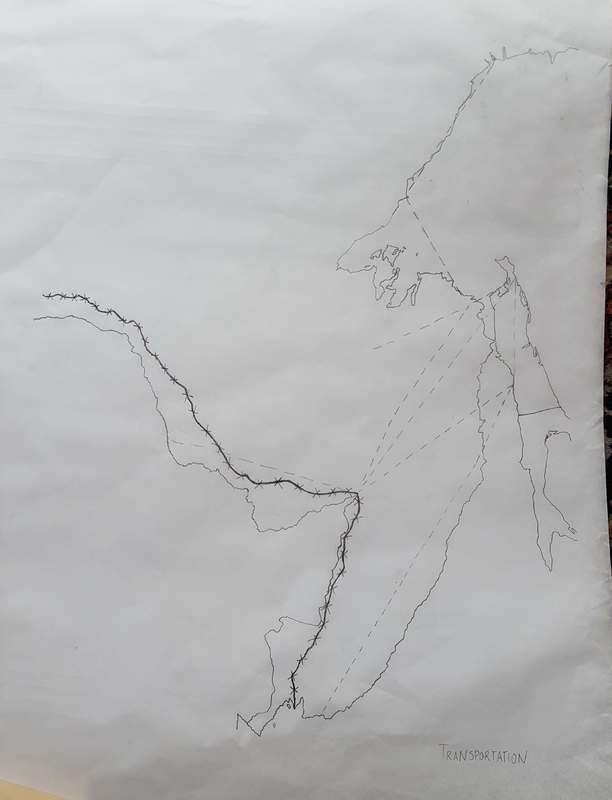
Railways and flight routes are marked with pencil; railways are marked with hatched lines and flight paths are marked with dotted lines.
EmmaClaireF
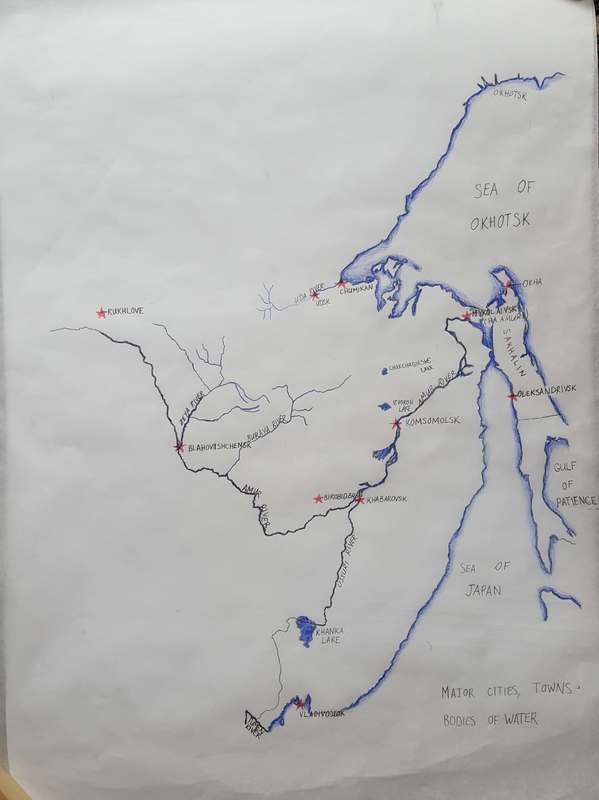
Major cities and towns are marked with large pink stars; major rivers are marked in blue and labeled.
EmmaClaireF
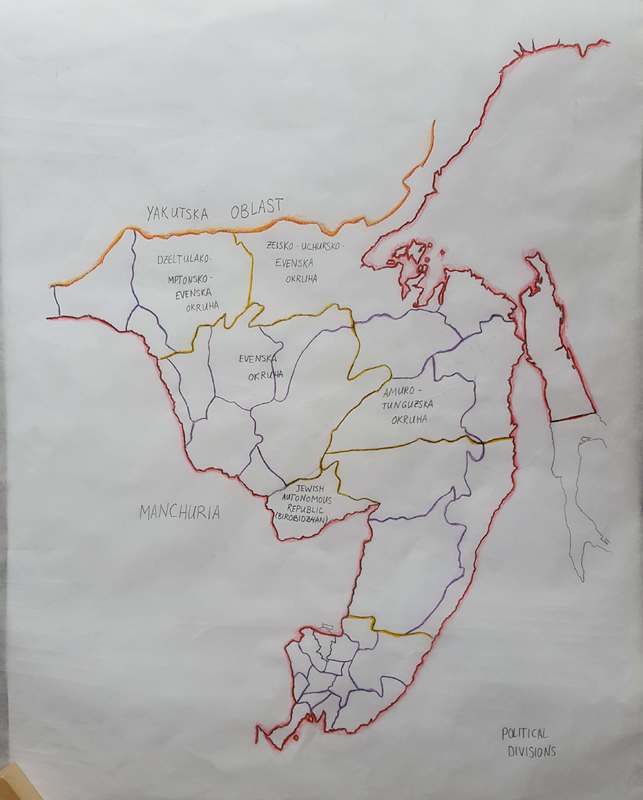
National and regional (oblast') borders, as well as borders lower-level divisions (okrugi, Ukrainian okruhy) are marked with colored lines offset by complimentary shading.
EmmaClaireF
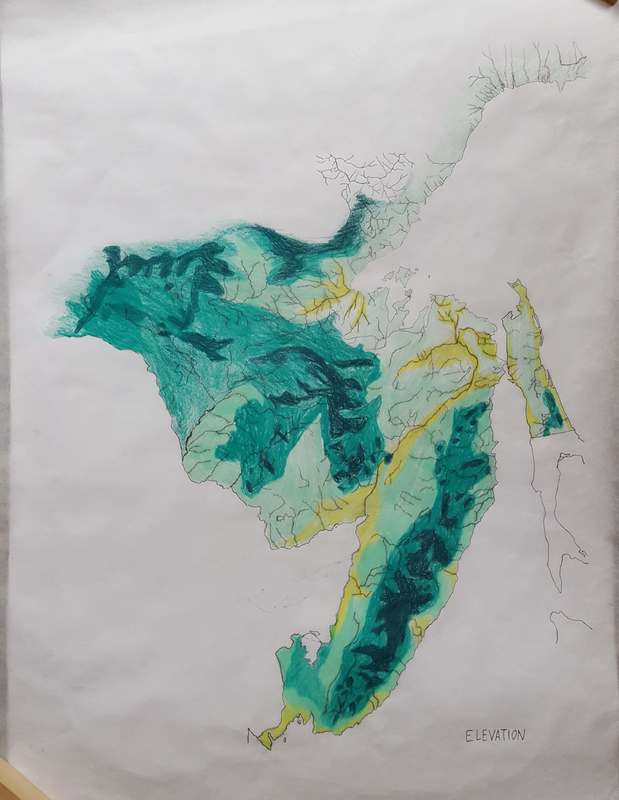
Elevation above sea level is marked by shading in four degrees, with darker colors indicating areas of higher elevation.
JoseR
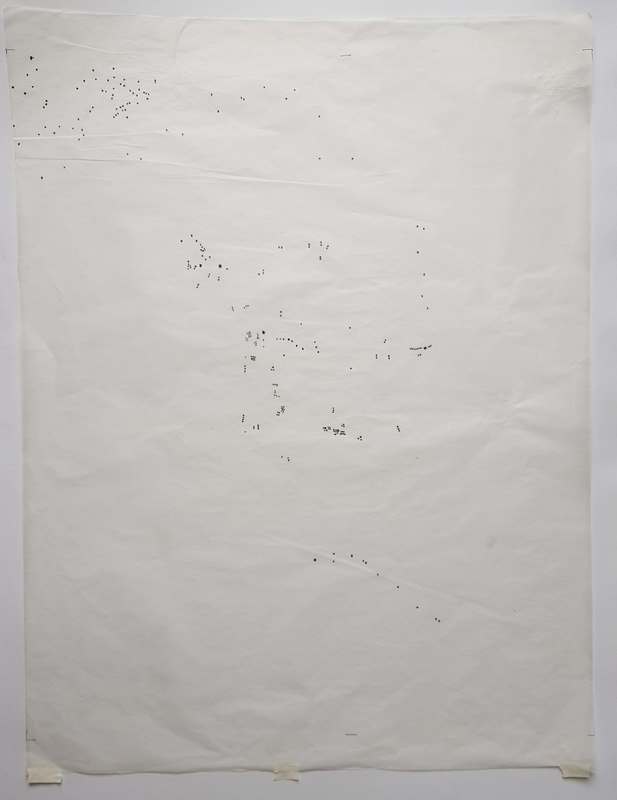
Containing areas of settlement, this layer is fascinating because when isolated, it more clearly suggests purposes behind the accumulated locations. These reasons may include aesthetic preferences or for strategic (military or for trade) uses.

JoseR
Containing small illustrations of creatures, this layer is interesting because it reflects another type of commodity for use as a trade resource: fur. Here we see bears, foxes, beavers, etc. To me, it can also depict a level of artistic play that the…
JoseR
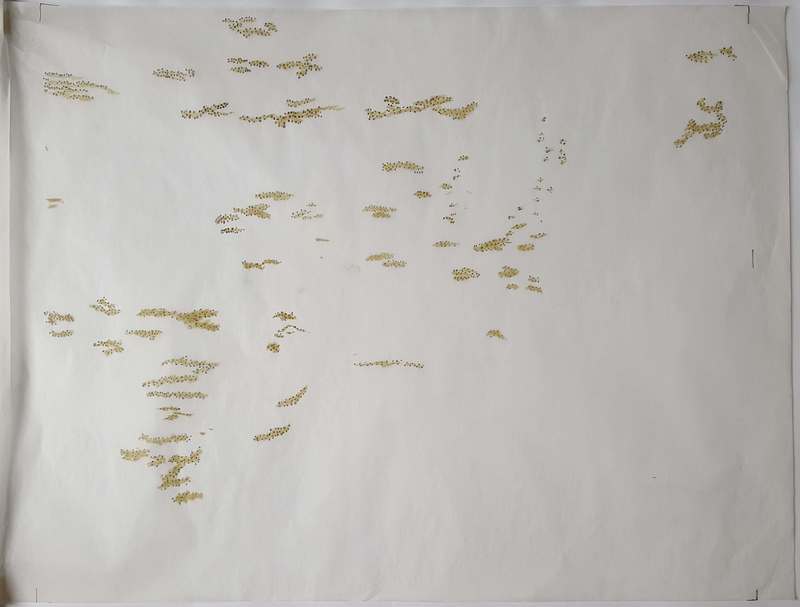
Containing patches of trees to represent forests, this layer is interesting because it shows potential areas to be navigated around, used as possible protection, or used to acquire building resources. As depicted in the multi-perspectival…

JoseR
Containing water elements such as rivers, lakes and coastlines, this layer is important because it represents en element of transporting of goods, travel, and resources. As a Dutch copy, this map could have provided information on access points for…