Browse Items (258 total)
Sort by:

LucieR
I chose to incorporate only the capitalized text in this layer for two reasons: (1) It seems to me that choice of the font/size of the textual references bears some implications about how important certain features were to the map-makers (the more…
LucieR
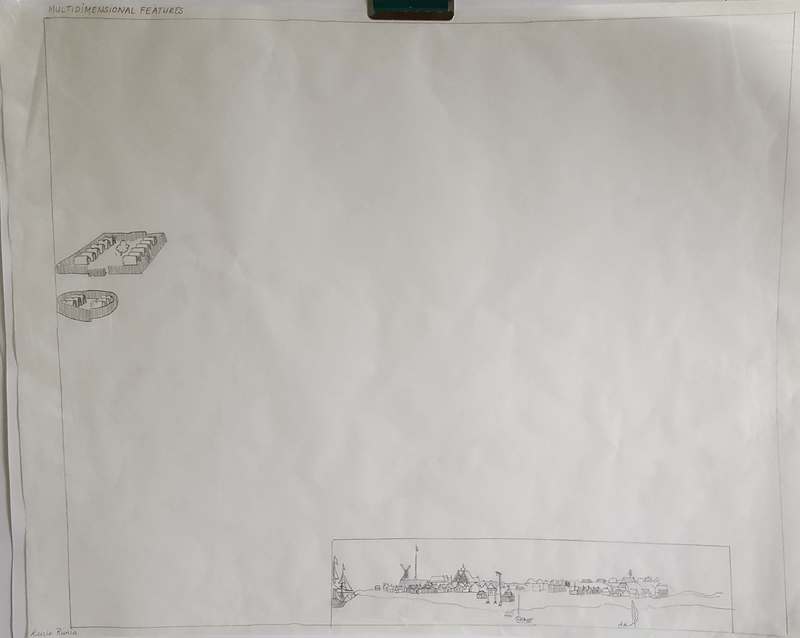
I think a remarkable characteristic of this map is the fact that it contains certain elements that are portrayed in perspective (i.e. not 'flat', like the rest of the map). There seems to be a 'sample' of an Indian village on the far left side of the…

ChristinaS
This layer contains elements of landscape integral to the landscape of London. This layer acts as a scaffold upon which the urban fabric of the city molds itself.

ChristinaS
This layer describes the various major thoroughfares and bridges upon the map. Several bridges were hand drawn upon the map at a later date of publication, thus seemingly to float within space, unconnected to the streets.

ChristinaS
This layer contains parks, gardens and squares. The original map colors these spaces green. Several large scale parks such as Regent's Park and Hyde Park appear on the map. This map claims itself to be a partially drawn from intended future plans for…

ChristinaS
This layer possesses the buildings of London and the surrounding towns in 1814. Each item appears as a polygon.
IsabellaC
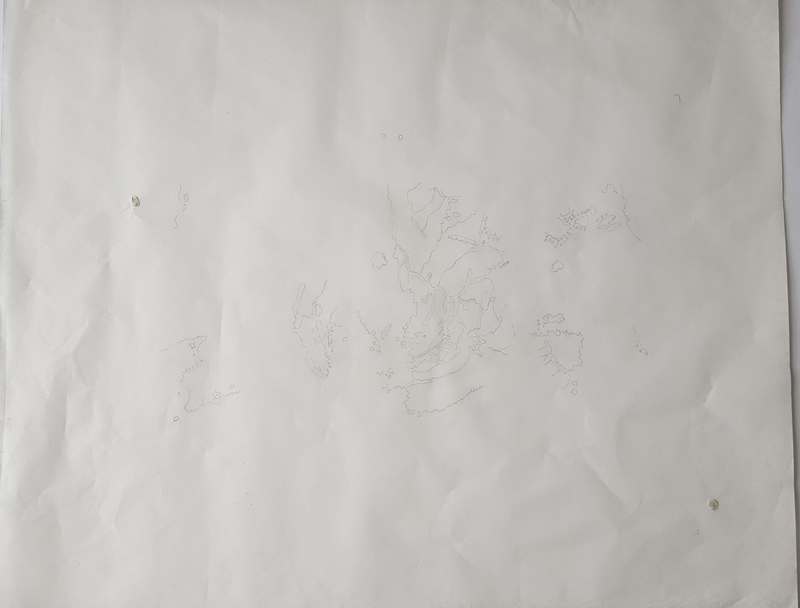
This layer shows the lines that the mapmaker used to design the projection. This is an important backbone to the map as it shows how Vespucci planned the unusual polar projection and the lines would have provided him with guidelines for where…

IsabellaC
In his map, Vespucci does not distinguish between countries or within land masses by lines. Instead, the lines on the map show the enge of land and how it borders with water, primarily oceans and seas. I have also included rivers in this layer…

ClaireC
This layer traces all of the rivers included on the map. I have tried to recreate the variations in line thickness used on the map to indicate relative size of the rivers. Not included in the layer are the names given to the rivers or the explicit…
IsabellaC
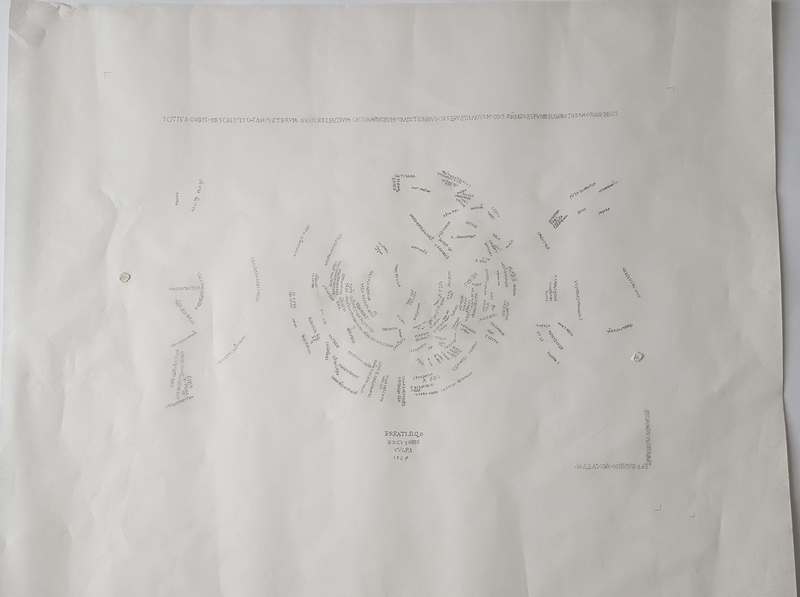
Text is an immediately striking part of the map. It forms the border of the map, and crowds in the globe, particularly filling the northern hemisphere. The text performs a variety of roles, from describing what the map shows and its maker (in the…